Front-Opening 20-Inch Trolley Suitcase With Password Lock
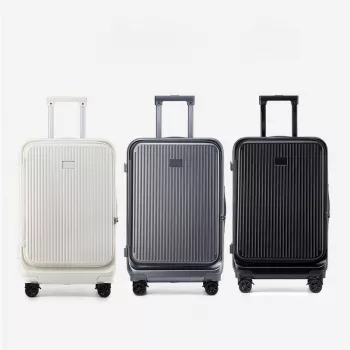
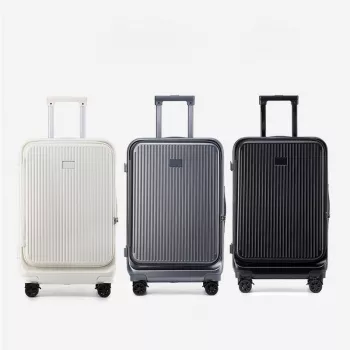
20-Inch Rolling Trolley Suitcase with Front Opening and Password Lock
A compact 20-inch rolling trolley suitcase is built for quicker transitions—security lines, gate changes, tight hotel entryways, and short business trips. This front-opening design keeps the items you reach for most (documents, small tech, and personal essentials) accessible without unpacking the whole case, while the integrated password lock adds a practical layer of day-to-day security for busy travel environments. For more guidance, see 9 Biggest Under-Seat Luggage and Personal-Item Bags – AARP.
What Makes a Front-Opening Trolley Suitcase Different
Traditional suitcases open like a book, which works well when you have space to lay everything flat. A front-opening trolley suitcase changes the flow: it prioritizes access while you’re standing up or working in a narrow footprint.
- Front-opening access is built for grab-and-go items like a tablet, documents, headphones, chargers, or a light jacket.
- Reduces the need to lay the suitcase fully flat in tight spaces such as airport benches, train aisles, or hotel entryways.
- Helps separate “in-transit” items from the main packed compartment for cleaner organization.
If you tend to pull out the same essentials multiple times per travel day, the front panel becomes a dedicated “working zone” instead of turning the main compartment into a revolving mess.
Key Features at a Glance
The 20-Inch Rolling Trolley Suitcase with Front Opening and Password Lock is designed around quick access, cabin-friendly dimensions (always confirm your airline’s limits), and easier movement through terminals.
- 20-inch rolling format intended for cabin-friendly travel and weekend trips (always confirm airline limits).
- Front-opening design for faster access to essentials during security lines and boarding.
- Integrated password lock for basic access control when moving through busy terminals.
- Trolley handle + rolling wheels for easier navigation through long corridors and station platforms.
- Structured packing approach: keep high-frequency items up front, and clothing/toiletries in the main storage area.
Quick Checklist
| Feature | Why it helps | Best for |
|---|---|---|
| 20-inch size class | More convenient for short trips and many cabin policies | Overnights, weekends, business travel |
| Front opening | Access essentials without opening the full case | Airports, trains, tight hotel spaces |
| Password lock | Adds a basic security step to deter casual access | Crowded terminals, shared transport |
| Rolling trolley design | Less strain than carrying | Long walks, connections, multi-stop days |
How the Password Lock Fits Into Real-World Travel
A built-in password lock won’t replace common-sense awareness, but it does reduce everyday friction—especially when a bag sits briefly out of sight or within easy reach of others.
- A password lock is useful for everyday travel friction: brief separation from your bag, overhead bins, or hotel lobbies.
- Set a memorable code and store it securely; avoid using easy sequences (e.g., 000, 123).
- For flights to/within the U.S., consider how security screening works with locks; some travelers prefer TSA-accepted locks depending on their needs.
- If the lock is integrated, learn the reset steps before the first trip so there’s no last-minute scramble.
For additional context on how airport screening handles locked luggage, see TSA: Locks and Luggage. For general guidance on carry-on versus checked baggage considerations, reference IATA: Baggage (Carry-on/Checked) Guidance.
Packing Tips for a Front-Opening 20-Inch Suitcase
Front-opening layouts shine when you intentionally split “during transit” items from “at destination” items. Packing with that division in mind keeps you organized even when plans change fast.
- Front compartment: passport wallet, boarding passes, pen, sanitizer, snacks, charger, earbuds, and a slim tech pouch.
- Main compartment: roll clothing to reduce bulk and keep heavier items closest to the wheel side for better balance.
- Use a flat pouch for liquids to speed up security checks (where applicable).
- Leave a little “buffer space” up front for last-minute items (souvenirs, receipts, a spare tote).
A simple rule: if you’ll need it while standing in a line, put it in the front. If you’ll only use it once you arrive, keep it in the main compartment.
Carry-On Compatibility and What to Check Before Flying
“20-inch” is commonly associated with carry-on luggage, but it’s not a universal guarantee. Small differences in dimensions—especially with wheels and handles—can matter from one airline to the next.
Everyday Care to Keep the Suitcase Looking Sharp
Travel Pairings: Two Easy Add-Ons for a Polished Trip
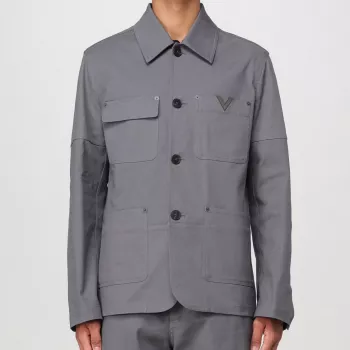
- Valentino Cotton Caban Jacket: a structured outer layer that transitions from airport to dinner without needing a full outfit change.
- Women’s Genuine Cowhide Leather Belt with Brass Buckle – 0.95 Inch Luxury Jeans Belt: a compact accessory that tightens up a travel look while taking almost no space.
FAQ
How do you reset the password lock on a suitcase like this?
Typically, you open the lock with the current code, locate a small reset button or lever near the dials, set your new code, then return the reset mechanism to its original position. Test the new code twice before travel, since exact steps can vary by model.
Is a 20-inch rolling suitcase always allowed as a carry-on?
No—many airlines allow it, but size and weight limits vary by carrier and route. Check published carry-on dimensions (and whether wheels/handles count) plus any regional aircraft exceptions that may require gate-checking.
What should go in the front-opening section versus the main compartment?
Keep travel documents, small tech, chargers, and other quick-access items in the front-opening section. Pack clothing, shoes, and toiletry bags in the main compartment, and place heavier items closer to the wheels for better stability while rolling.














Leave a comment