160 PSI Portable Bike Floor Pump With Dual-Valve Head
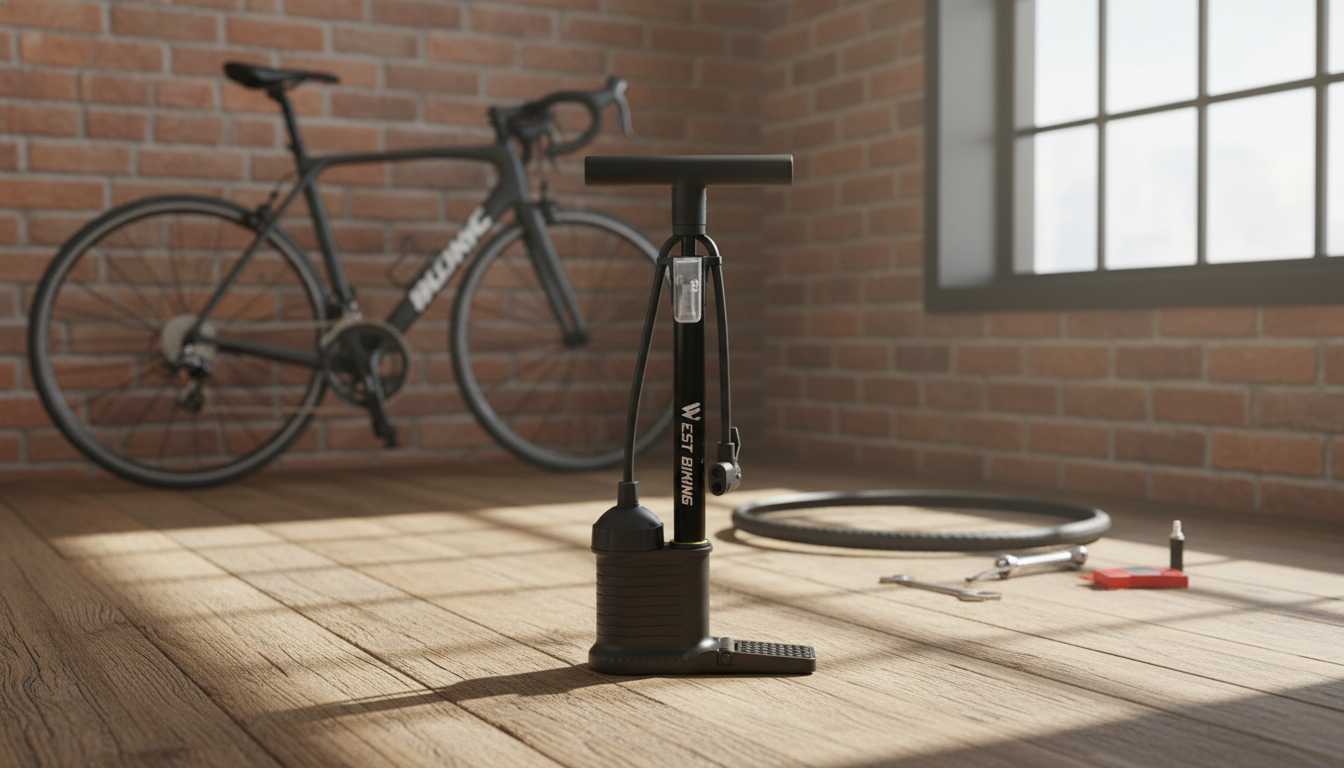
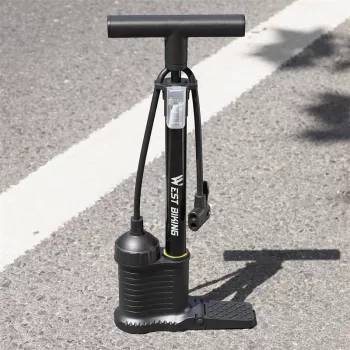
High-Pressure Portable Bike Floor Pump (160 PSI) with Dual-Valve Head
A reliable pump is the difference between a quick top-off and a frustrating roadside stop. This high-pressure portable floor pump is built for fast inflation up to 160 PSI, with a dual-valve head that works with common bicycle valve types so tire checks and adjustments stay simple at home, at the trailhead, or before a commute.
What this pump is designed to do
Daily tire pressure is one of the smallest habits that makes the biggest difference in how a bike feels. A high-pressure portable floor pump is built to make that habit easy and repeatable—without digging for adapters or fighting the wobble of a tiny hand pump.
- Reach higher pressures efficiently for road, gravel, and hybrid tires that benefit from precise PSI.
- Handle everyday top-offs without hunting for adapters thanks to a dual-valve head.
- Stay portable enough to store in an apartment, garage corner, or car trunk for pre-ride checks.
- Support consistent inflation habits that help reduce pinch flats and improve rolling feel.
Key features that matter on real rides
Specs only matter when they translate into fewer hassles on the ground. The combination of a 160 PSI ceiling, a dual-valve head, and a stable floor-pump stance is geared toward quick, low-drama inflation—especially for riders who like to dial in pressure rather than “guess and go.”
- 160 PSI maximum: suitable for high-pressure road tires and for seating many tires during setup (depending on rim/tire fit).
- Dual-valve head: compatible with Presta and Schrader without swapping heads or carrying multiple adapters.
- Floor-pump format: offers better leverage and stability than many mini pumps, reducing effort per stroke.
- Portable footprint: easier to keep within reach for quick checks before leaving home or loading a bike for travel.
If you want a ready-to-go option for everyday checks, see the High-Pressure Portable Bike Floor Pump 160 PSI with Dual-Valve Head.
Valve compatibility and how to use the dual head correctly
Most bikes use one of two valve standards, and a dual head is meant to remove the “which adapter do I need?” step. If you’re unsure which valve you have, a quick visual check usually settles it: Presta is narrow (common on road and many gravel bikes), while Schrader is wider (common on hybrids and many bikes that resemble car-tire valves). For background, see Presta valve and Schrader valve.
- Identify the valve: Presta is narrower (often on road/gravel bikes); Schrader is wider (common on many hybrids and some MTB).
- If using Presta, open the valve: unscrew the small top nut before attaching the pump head (press briefly to confirm air can flow).
- Seat the pump head firmly: push it straight onto the valve and lock it (if the head uses a lever) to prevent leakage while pumping.
- Remove it cleanly: after inflating, unlock and pull the head straight off to avoid bending the stem; close the Presta nut afterward.
- Tubeless note: quick, steady strokes can help achieve the initial seal, but always stay within tire and rim pressure limits.
Choosing the right PSI for comfort, speed, and control
There isn’t one “correct” pressure for every rider or route. The most reliable rule is also the simplest: treat the tire sidewall range as the hard boundary and never exceed the maximum printed PSI/bar. Within that safe window, small changes can dramatically change ride feel—especially on narrower tires.
Quick PSI decision guide (use tire sidewall limits as the final authority)
| Bike & Tire Type | Typical Use | Practical Starting Approach |
|---|---|---|
| Road (narrow tires) | Smooth pavement, training, commuting | Aim toward the mid-to-upper part of the tire’s recommended range; fine-tune in small steps for comfort vs. speed |
| Gravel (mid-width tires) | Mixed surfaces, washboard, light trails | Start in the middle of the range and lower slightly for rougher surfaces; prioritize grip and control |
| Hybrid/City (wider tires) | Commuting, paths, light gravel | Start mid-range; add a little PSI if the tire feels squirmy under load, reduce a bit for comfort on broken pavement |
| MTB (wide tires) | Trails, roots, rocks | Use the lower end of the range as a baseline; adjust carefully to avoid rim strikes and maintain traction |
When a high-pressure portable floor pump is the right choice
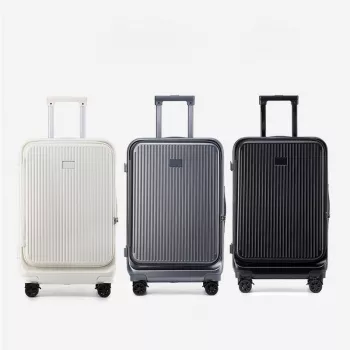
For riders who travel frequently—races, charity rides, weekend getaways—keeping gear organized helps ensure the pump is actually with you when you need it. A compact travel option like the 20-Inch Rolling Trolley Suitcase with Front Opening and Password Lock can make it easier to pack riding essentials and keep them accessible.
Care tips for consistent sealing and accurate inflation
Product details and where it fits
FAQ
Does a dual-valve head work with both Presta and Schrader without an adapter?
Yes. A dual-valve head is designed to fit both common valve types without swapping parts, but you still need to open the Presta valve nut before pumping and make sure the head is fully seated/locked to prevent leaks.
Is 160 PSI necessary for most bikes?
Most riders won’t inflate anywhere near 160 PSI, but the extra headroom is useful for high-pressure road tires and fine-tuning pressure accurately. Always stay within the tire’s printed sidewall limits regardless of the pump’s maximum.
Why does the pump sometimes leak air when removing the head?
A brief hiss is often just air escaping from the hose or pump head, not the tire. If you’re losing noticeable pressure, the head may not have been fully seated/locked or the Presta valve may not have been opened; remove the head straight off and recheck the seal.













Leave a comment